
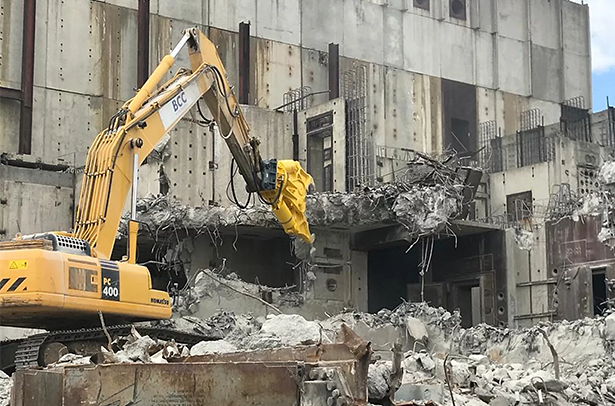
Although people typically associate the word demolition with wrecking balls, dust, and debris, few realize that many materials taken from demolished buildings can be recycled or reused and so save landfills and resources. Whether a homeowner demolishes a shed or a big company has to do a job, there is always the potential for minimizing waste and materials of value returned to use. This blog will explain how to recycle and reuse materials once the demolition has occurred, taking an eco-friendly approach to clearing the area for new construction.
Identify What Can Be Recycled
Most issues that crop up after demolishing a building or a structure must be identified before a demolition project. Many of the parts from buildings and structures can be recycled. Concrete, bricks, wood, metal, and even glass can often be recycled or collected by specialty recycling facilities. Aggregate. Concrete and brick can be crushed to make new aggregate materials, while metal can include materials like steel, aluminum, and copper that might be melted and reformed. Pre-sorting these materials before recycling can make it much smoother and more efficient, with fewer items added to landfills.
Salvage Usable Wood and Timber
Wood is one of the most versatile materials that can be reused after a demolition. If the wood is in good condition, it can always be reused for different projects, from producing new furniture to reusing it in construction. Beams, flooring, and sometimes even doors can often be carefully removed and stored for future use. If the wood is too damaged, it can still be recycled and turned into mulch, chips, or biofuel. Salvaging wood also minimizes waste and saves on expenditures in acquiring new materials, especially if working with hardwoods that may be costly.
Repurpose Bricks and Concrete
Bricks and concrete seem like rubble when a building has fallen, but they are necessary for most new construction. If the bricks are undamaged, they may be cleaned up and reused in other building projects. They can give character to houses, walkways, or gardens. Concrete can be crushed into aggregate, a useful material for new roads and driveways, or as a foundation base layer. This reduces the requirement to acquire new gravel, assists in preserving natural resources, and cuts transportation costs.
Recycle Metals for New Uses
Metals are perhaps one of the most highly valued materials that should be recovered in demolition. Buildings’ most frequently used materials include steel, aluminum, and copper. These metals can be melted and reused several times without losing strength or quality. Copper piping from houses, steel beams from commercial buildings, and aluminum window frames should all be collected for recycling centers. Recycling metals to save energy instead of mining new metals is a great saving. Recycle Steel: Recycling steel saves 75% of the raw material energy to make new steel.
Reuse Glass and Windows
Glass is another material that can be recycled, though it requires being treated with great care. Any windows, mirrors, and other glass products are recyclable if they do not break. Old windows, for instance, can be used in new buildings or decorative work. Even broken glass has its worth; it can be crushed and recycled into new glass products or used in concrete as decoration. You will save on your new purchases and prevent the glass from ending up in landfills. It decomposes over a long period.
Find New Life for Fixtures and Fittings
Fixtures and fittings from a demolition site can sometimes find a new life ahead. Sinks, bathtubs, doors, cabinets, and light fixtures are commonly salvaged and resold or donated to others. Salvage yards are always looking for usable items that can be refurbished and sold to homeowners or builders in search of affordable alternatives to buying new materials. By recovering and reusing these fixtures, you play your part in a circular economy: keep products in use as long as possible before they become waste.
Plan for Reusing Insulation Materials
Insulation is one of those invisible materials that people forget when demolishing, but some types of insulation, like fiberglass and foam board, may be salvaged or reused in another construction. If the insulation is in good condition with no contamination, it is still valid to continue maintaining a temperature and save the generated energy. Insulation can still be recycled for other purposes, like soundproofing or cushioning, even if not reused within the building. Over-removal should be avoided, and insulation should be stored properly so as not to turn into waste.
Save Plumbing and Electrical Components
Most of the plumbing and electrical materials found in the system can still be reused or recycled. Copper piping can be salvaged and used again, and electrical wiring, fixtures, and switches, if in good condition, can be reused and installed in new projects. Recycling centers collect metal piping and wiring, which are reworked and reused. By saving these parts, you also save on the reuse of resources and money for future construction.
Donating Salvaged Materials to Nonprofits
Not everything rescued from a demolition site needs to be sold or reused. Many nonprofit organizations accept building materials, fixtures, and fittings to help low-income families in renovation or new builds. This will prove not only to benefit the environment but to help your community as well. Organizations such as Habitat for Humanity ReStores accept various building materials, including wood and brick, plumbing fixtures, and appliances, giving them new life in someone else’s home.
Partner with Recycling Centers and Salvage Experts
You can partner with recycling centers and salvage experts if you do not know exactly what to do with materials from a demolition project. These experts will help assess the value of materials, ensure one gets the right containers, and ensure materials get sorted and recycled correctly. Therefore, as you smash away, experts will get the most out of your materials afterward. In addition, most recycling centers provide drop-off services, which makes the disposal of materials responsible.
Conclusion
Demolition is not a synonym for that one big pile of waste. If planned and worked on adequately, most materials obtained from demolition can be recycled or reused. You can identify materials that can be reused, work with experienced experts, and think of new ways in which wood, metal, and glass may be reused when you prepare for demolitions. That will save you money on future undertakings while saving the environment. Making eco-friendly choices in demolition benefits the earth and your community through resource conservation and reduction in landfill waste.